Ponding Water, Blocked Drains and the Slow Leak: Reading a Flat Roof After a Storm
Most flat roof damage announces itself on the roof long before it shows on a ceiling, if you know where to look.
October 14, 2026 · 4 min read
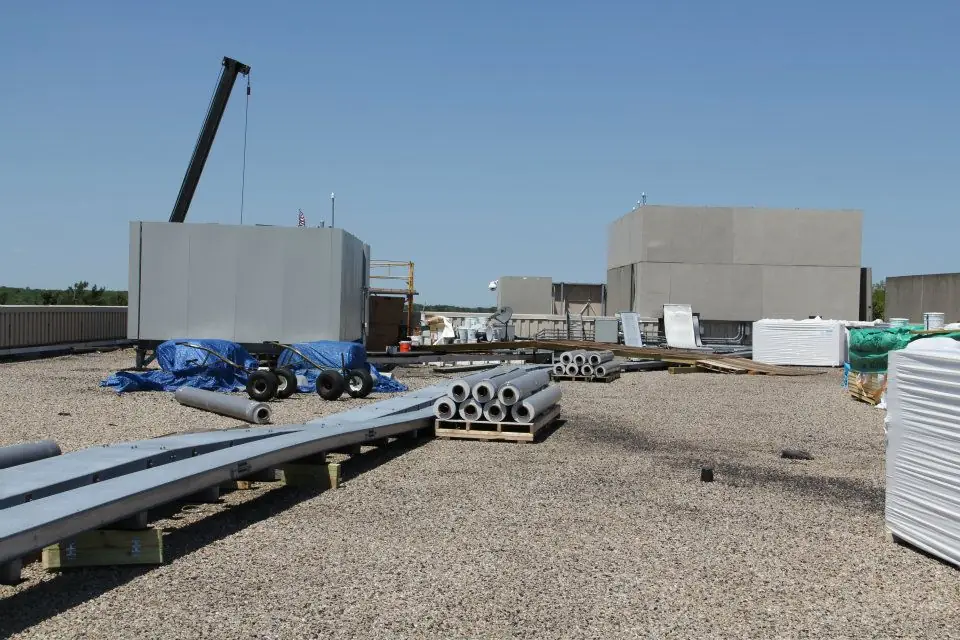
After a nor'easter or a stretch of hard rain, the instinct is to check the ceilings. By the time a ceiling tile stains, though, water has usually been working for a while. The roof surface tells the story sooner. A few minutes of looking from a safe vantage point, such as a roof hatch, an upper window or a stairwell with a roof view, can show you what the storm did and what it's likely to do next.
A caution before anything else: stay off the roof unless you've been trained for it and the surface is dry. Wet membrane is slick, and edges and openings are hazards. If something needs a closer look, that's a job for a crew with fall protection.
Ponding water: what it looks like and why it matters
Ponding is water that stays on a low-slope roof after the rain has stopped. A film that dries within hours is normal. Standing water that's still there a day or two later, or that leaves a ring of dirt and algae when it recedes, means the water has nowhere to go. The cause may be a blocked drain, a drain set higher than the surrounding roof, a deck that has deflected over time, or insulation that has compressed.
Standing water isn't automatically a leak, but it stresses everything beneath it. It adds weight, it keeps seams and flashings wet, and in winter it freezes and thaws against the membrane. Take photos of any pond from the same spot after each storm. A pond that's growing is useful information for your roofer.
Blocked drains and the debris that causes them
Check every drain, scupper and gutter you can see. Leaves, grit, plastic bags and ice all stop water from leaving. Roof drains often have strainer domes that catch debris, which protects the piping but hurts flow when the dome is buried. Conductor heads and roof leaders downstream can clog where you can't see them, and a drain that stays full after the rain ends often has a blockage below the roof line.
Drains clog fastest right before the storms that need them most. Autumn leaf drop and spring pollen season both load them, and windblown debris collects against parapets and equipment curbs. A maintenance visit that includes debris removal from drains, gutters, conductor heads and roof leaders, like the one A&M Roofing Services provides, catches this before the weather does.
Reading the surface after a storm
Beyond water, scan for physical changes. This checklist takes about ten minutes:
- Seams that have lifted, opened or shown a visible gap along the edges
- Flashings at walls, curbs and pipes that look pulled away, cracked or sagging
- Blisters or bubbles in the membrane, especially on the sunny side
- Torn or punctured spots, often near rooftop equipment where people walk
- Loose or displaced edge metal and coping after high wind
- Debris piled against parapets or equipment, which shows where wind and water are collecting
Photograph each finding with something in the frame for scale, and note where it sits on the roof. Those photos let a roofer plan the visit before arriving, which can save a trip.
The slow leak
The hardest problems are the ones that never drip hard. Water can enter at one point, run along the deck or between insulation boards, and show up a long way from where it got in. It can soak into insulation and sit there, hurting the insulation's performance and giving mold a place to start. Signs include a musty smell in an upper-floor space, a ceiling tile that stains, dries and stains again, paint that bubbles on an interior wall, or a section of roof that feels soft underfoot during an inspection.
Because the entry point and the symptom rarely line up, tracing a slow leak is a job for people who read roofs for a living. Documentation helps them. Your dated photos, your notes about which storms came before each stain, and your roof plan all narrow the search.
Winter adds its own problems
In New England, ponding and clogged drains get worse when temperatures swing around freezing. Meltwater refreezes in a drain bowl or a gutter and blocks the next thaw. Ice at the roof edge can hold water back. After a heavy snow, look at where drifts build against walls and equipment, since those spots carry extra load and take the most abuse when the snow finally melts. Don't chip at ice on the membrane. A shovel or ice pick can cut a sheet that was perfectly sound.
When to call
Call a roofer when ponding persists, when drains won't clear, when you see open seams or torn membrane, or whenever interior staining appears. Don't wait for a ceiling to fail. Small issues caught early are usually small repairs.
A&M Roofing Services repairs and installs built-up, EPDM, TPO, PVC and modified bitumen roofs, along with slate, metal and tile, and offers same-day service and repair. Reach the office at (978) 475-4500 or estimating@amroofing.net.
A&M Roofing Services, (978) 475-4500
Call (978) 475-4500More articles
EPDM vs TPO vs PVC: Choosing a Single-Ply Membrane for a Commercial Roof
The right single-ply membrane depends on what your roof has to put up with, far more than on any brand name.
What a Commercial Roof Maintenance Visit Should Leave You With
The value of a roof visit is the paper trail and the cleared drains it leaves behind, not the hour someone spent walking the membrane.